Clearing, excavation, foundations, finished landscapes, and winter access. Different scopes, one standard — read the site, respect the material, leave the land better than we found it.
1995Working New York ground since
12Service lines under one crew
4Seasons of work, winter included
1Standard on every job
01Land clearing / Forestry mulching
Reclaiming overgrown acreage
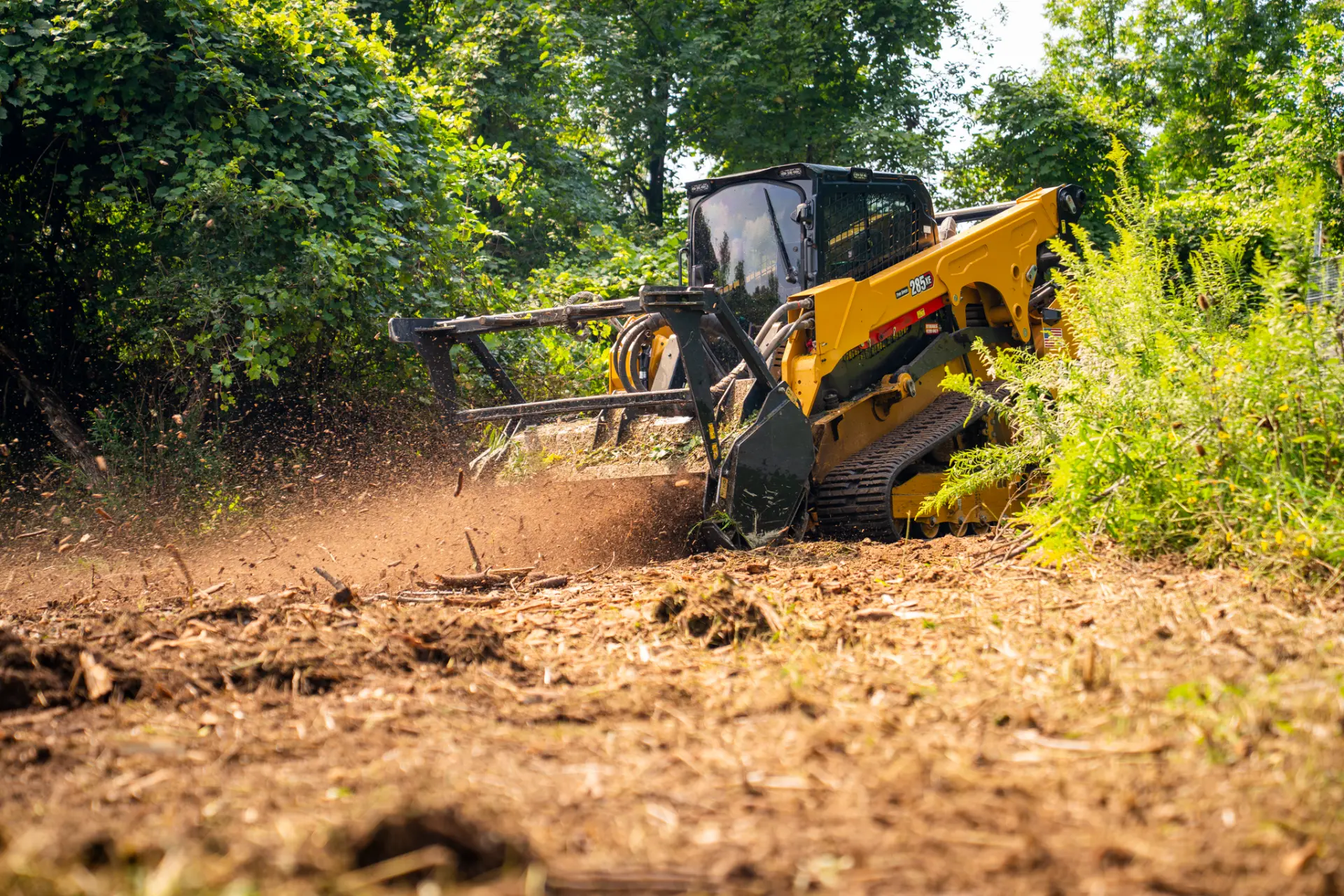
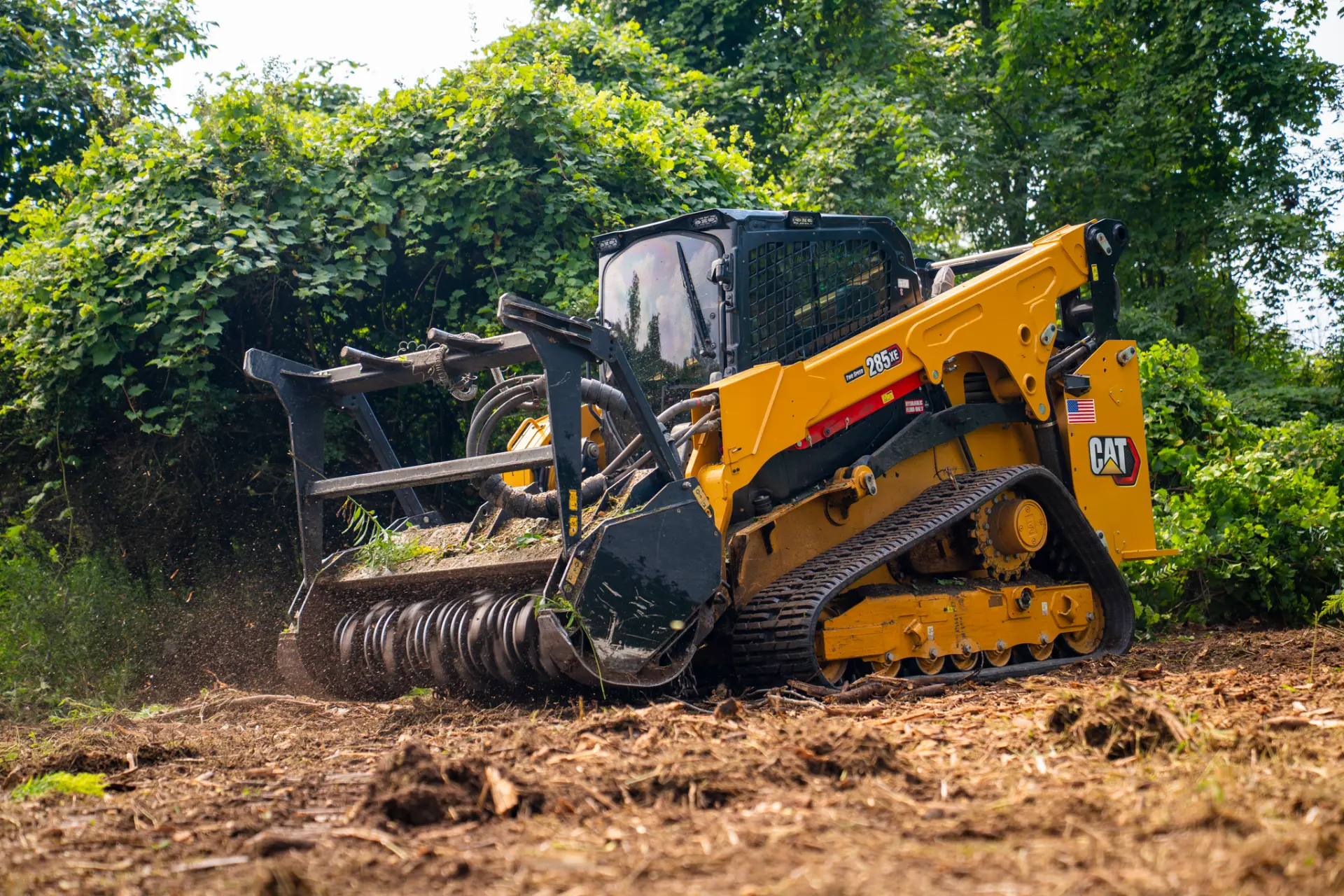
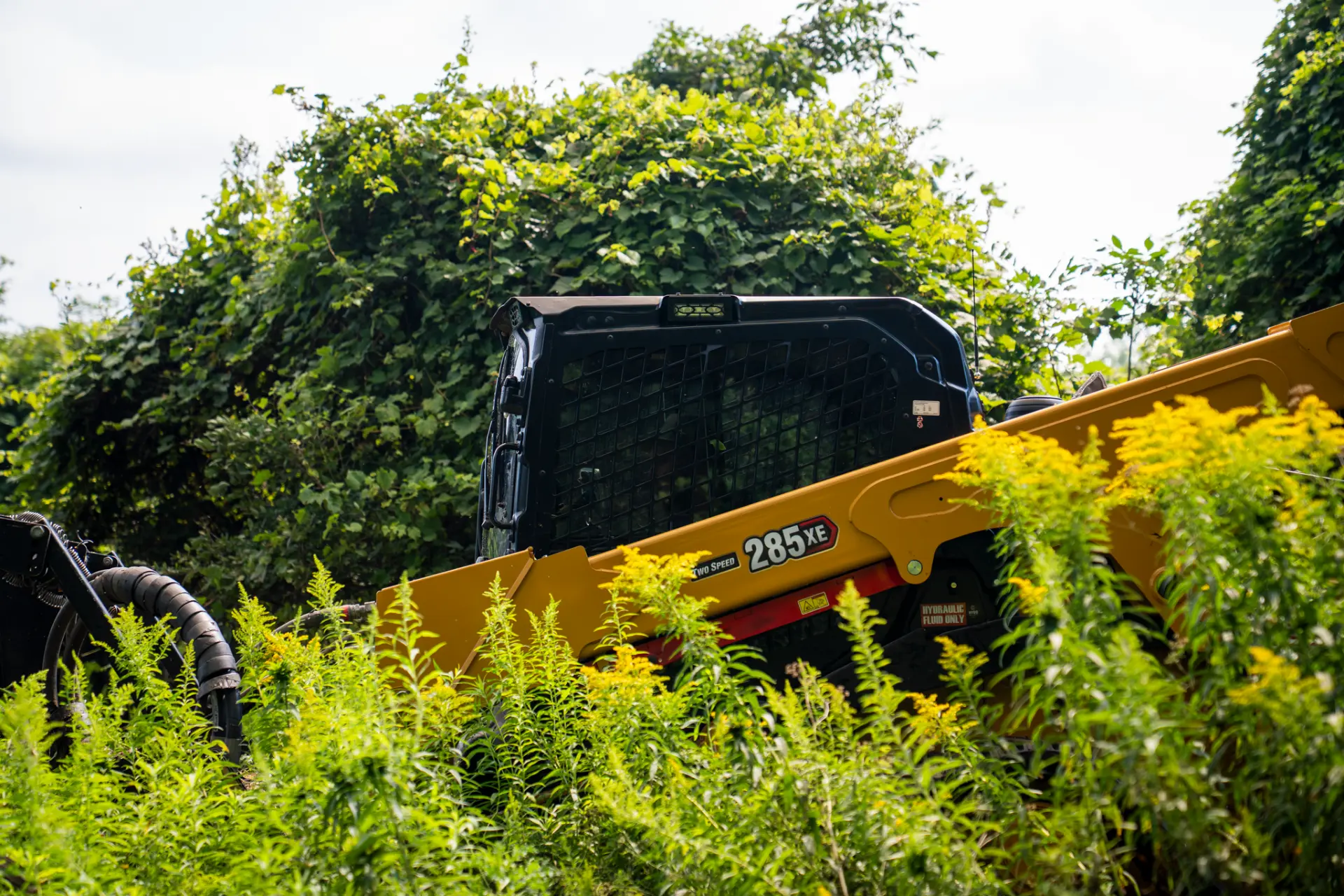
Dense brush and small-diameter growth mulched in place, leaving a clean, plantable surface and no burn piles to haul away. Access lanes were cut first so the property stayed usable throughout.
The challenge
Years of unchecked growth had closed off usable acreage, and the owner did not want a moonscape of stumps and burn scars left behind.
How we ran it
Mulching head on a compact track loader, working in lanes from the access point outward, keeping mature trees and turning everything else into a mulch layer that holds soil instead of blowing away.
Mulched on site
No haul-off
Access-first sequencing
02Excavation / Site preparation
Shaping a buildable site
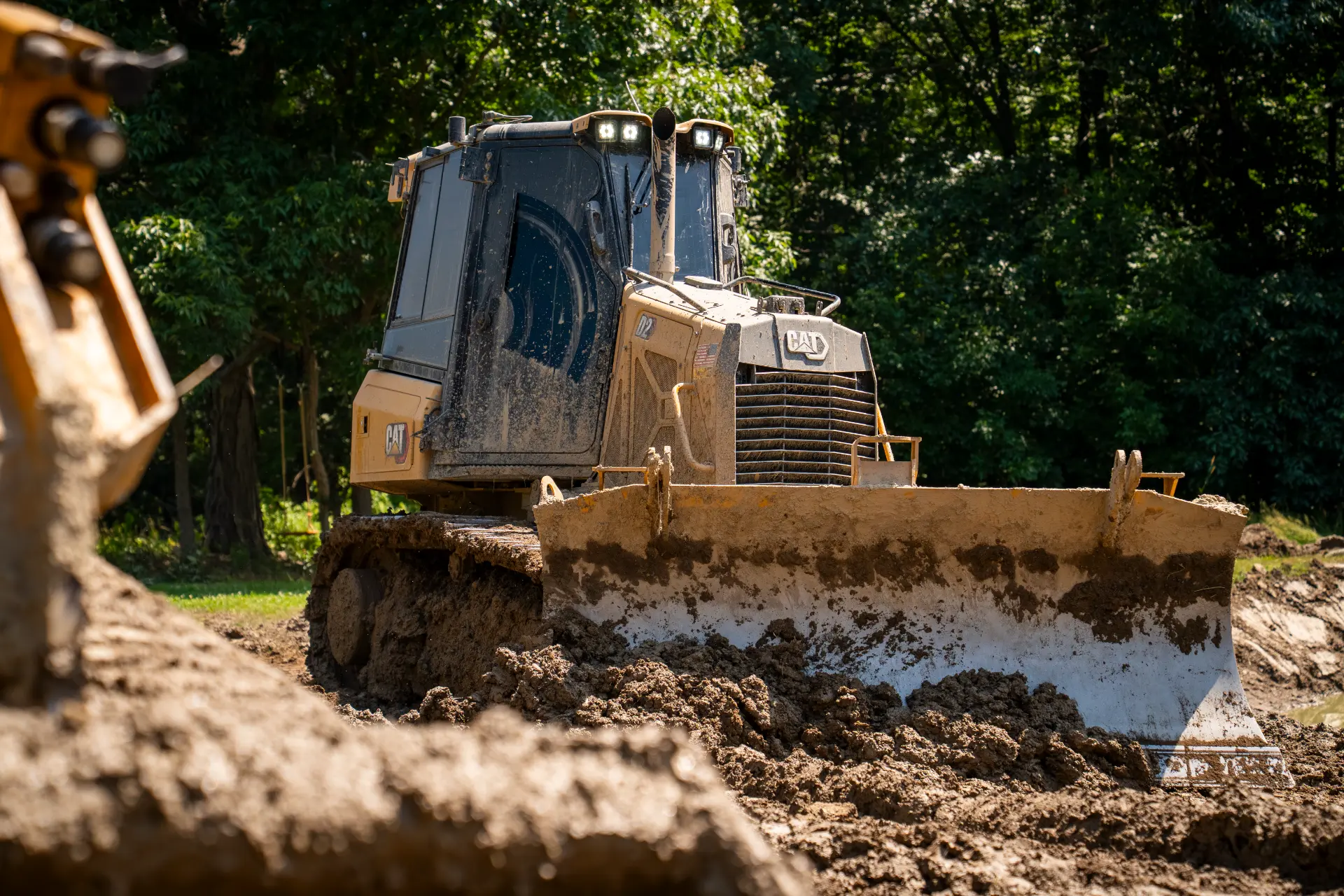
Cut and fill balanced across the property to hold grade near a pond edge, with silt control set before the first bucket moved and a finished pad ready for the next trade.
The challenge
Working close to standing water meant any loose material had one place to go, and the pad still had to come out at the elevation the plan called for.
How we ran it
Silt fence and stabilized entrance first, spoils staged uphill, fill placed and compacted in lifts, and finish grade checked against the survey rather than by eye.
Balanced cut and fill
Erosion control
Pad to spec
03Structural / ICF foundations
Foundations set to the line
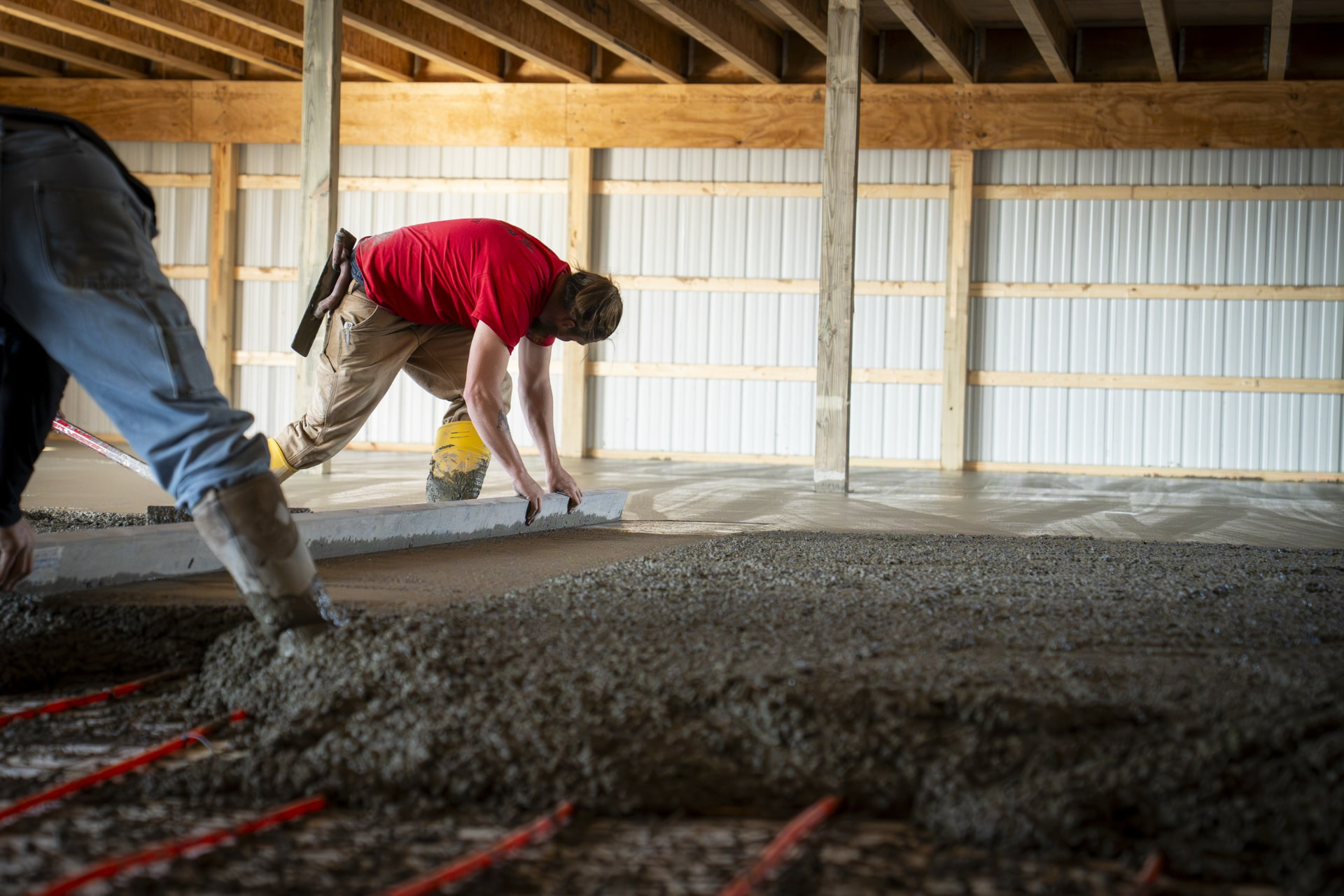
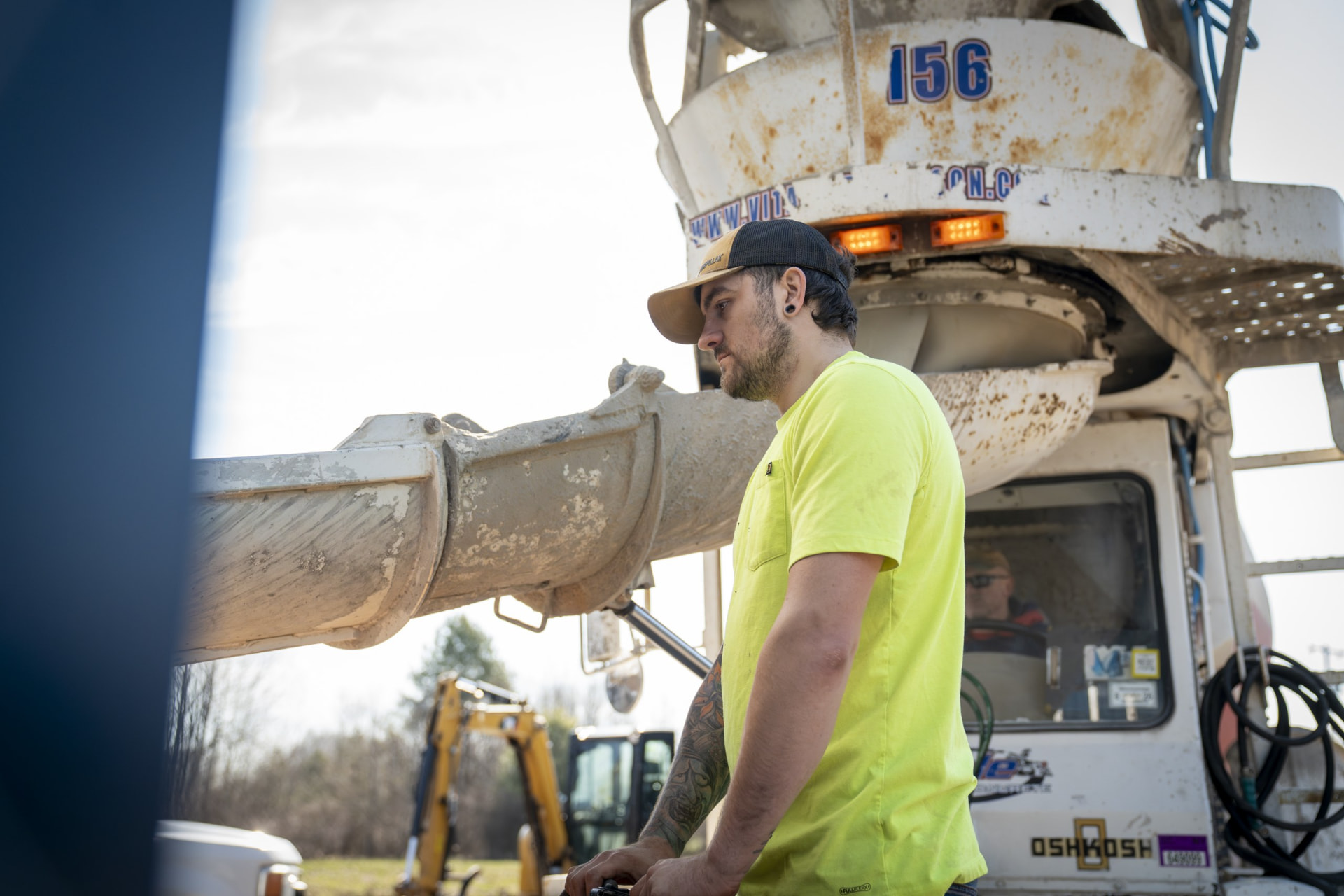
Footings, forms, and flatwork coordinated with the builder's schedule. Layout checked twice, pours planned around weather, and the slab finished flat enough for the framing crew to start clean.
The challenge
The framing crew had a fixed start date, and an insulated form wall gives you no room to fudge a footing that is out of level.
How we ran it
Footings shot and verified before forms went up, bracing set for a full-height pour, concrete scheduled around a clear weather window, and the builder kept current daily.
Insulated forms
Builder coordination
Flat, square, level
04Grading / Drainage
Moving water the right way
Finish grading tied into swales and subsurface drainage so runoff leaves structures, driveways, and lawns the way the land already wants it to go.
The challenge
Runoff from uphill had been crossing the driveway and pooling against the building every spring, taking the gravel with it.
How we ran it
Intercepted the water above the structure with a swale, ran a drain line to a stabilized outlet, then reset the driveway crown so the surface sheds instead of collects.
Positive drainage
Swale tie-ins
Stabilized surfaces
05Landscape construction
Built into the land
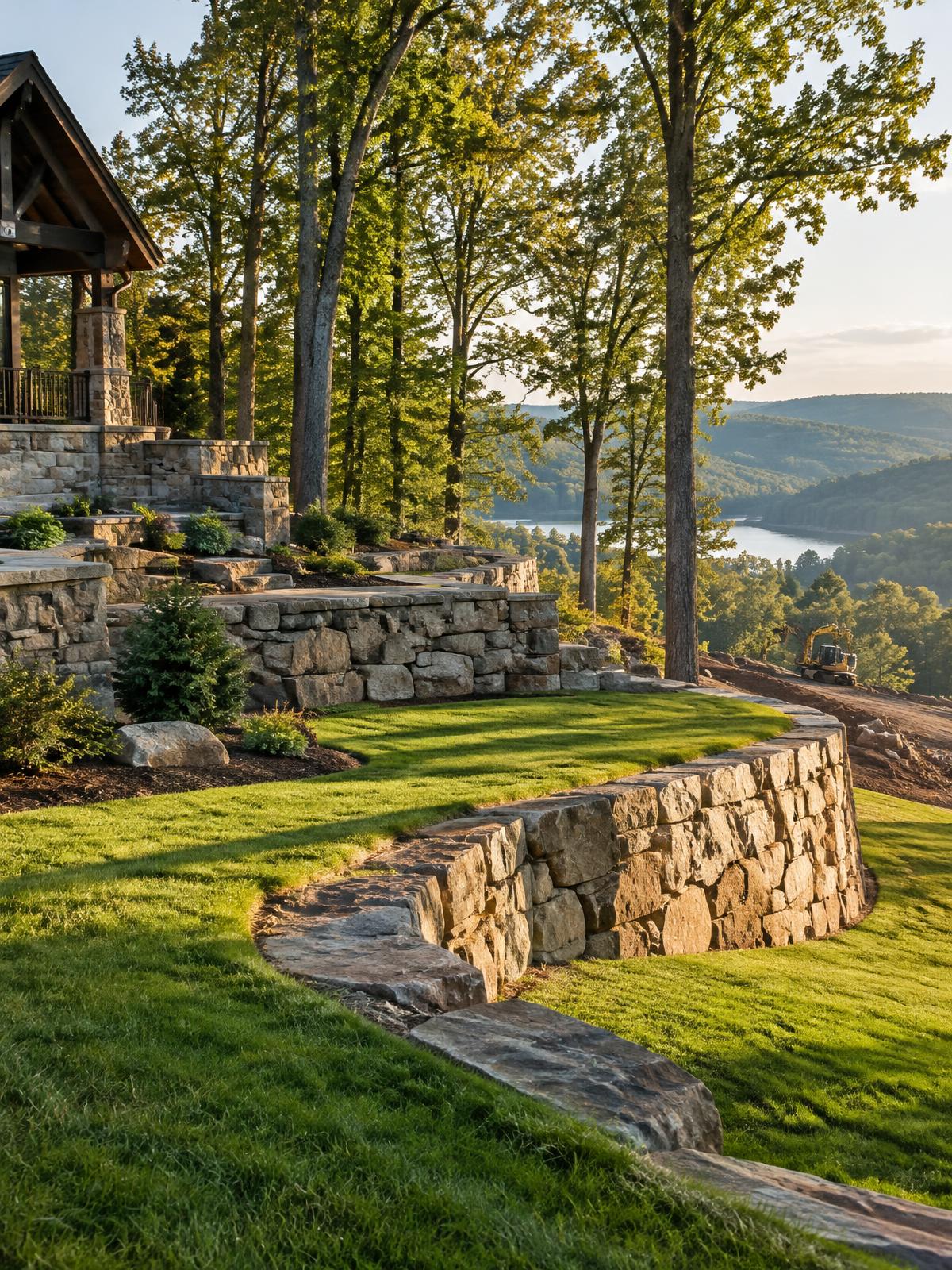
Stone, grade, and planting worked together into a hillside so the finished space reads like it was always there — and drains, holds, and wears like it was built to stay.
The challenge
A steep wooded slope with no flat ground to stand on, and an owner who wanted usable outdoor space without a wall that looked bolted onto the hill.
How we ran it
Terraced the grade in stages, used stone sized to the site, tucked drainage behind every face, and set plantings so the slope knits back together as it matures.
Natural materials
Hillside retention
Long-term wear
06Hardscape / Retaining walls
Holding grade at the water's edge
A failing slope rebuilt with a properly drained, engineered wall — base compacted, backfill free-draining, and the finished line set so the grade above it stays where it was put.
The challenge
The previous wall had no drainage behind it, so every freeze pushed it further out until the grade above started to go with it.
How we ran it
Removed the failed block, over-excavated for a compacted base, built back with geogrid at the courses that needed it, and put clean stone and a drain line behind the entire face.
Drained backfill
Compacted base
Built to hold
07Concrete / Flatwork
Driveways, pads, and patios
Sub-base prepared, forms set to the line, and pours planned around the weather — from plain service pads to stamped and finished patios that carry traffic and winter without cracking up.
The challenge
Flatwork in this climate fails from below and from freeze cycles, not from the concrete itself, and most cracked driveways were doomed before the truck showed up.
How we ran it
Proper stone base compacted to depth, reinforcement placed rather than pulled, control joints cut on schedule, and curing protected through the first critical days.
Prepared sub-base
Weather-planned pours
Decorative finishes
How a project runs
From first walk to final grade.
01
Walk the property
We look at grade, water, access, soils, and what the property needs to do when the work is finished.
02
Scope and number
A clear written scope with the sequence, equipment, and cost — no surprises halfway through.
03
Mobilize
Protection and erosion control first, then the machines that fit the site instead of the machines we happen to own.
04
Build it
Daily communication, clean work areas, and decisions made in the field by people who can make them.
05
Leave it better
Final grade, cleanup, stabilization, and a walkthrough before we pull off the property.
Conditions
Ground we work in.
Wet and clay soils
Upstate clay holds water and moves with frost. We build the base for the soil we find, not the soil we hoped for.
Steep and broken grade
Slopes, ledges, and hillside sites where access has to be built before the real work can start.
Tight residential lots
Compact equipment, protected lawns and driveways, and staging planned so your neighbors stay your neighbors.
Active commercial sites
Phasing and scheduling that keeps traffic, parking, and operations moving while the work goes on around them.
Rural acreage
Long lanes, no utilities, and properties where the nearest hard surface is a mile away. Standard for us.
Winter conditions
Frost depth, thaw cycles, and storm response built into the plan instead of treated as a surprise.